Defects in additively manufactured parts
Due to the complicated thermal cycle history during additively manufacturing, residual stress is normally induced in the part produced. Parts failure such as cracks can be resulted. Post heat treatments can be performed after additively manufacturing but then it will cost time and money. Controlling residual stresses and optimizing process parameters can be beneficial to reduce parts failure.

Synchrotron CT for defects analysis of additively manufactured materials
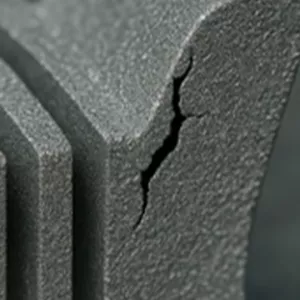
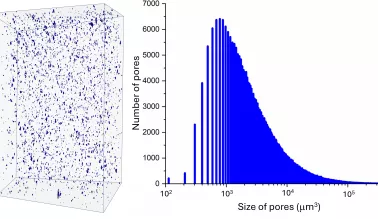
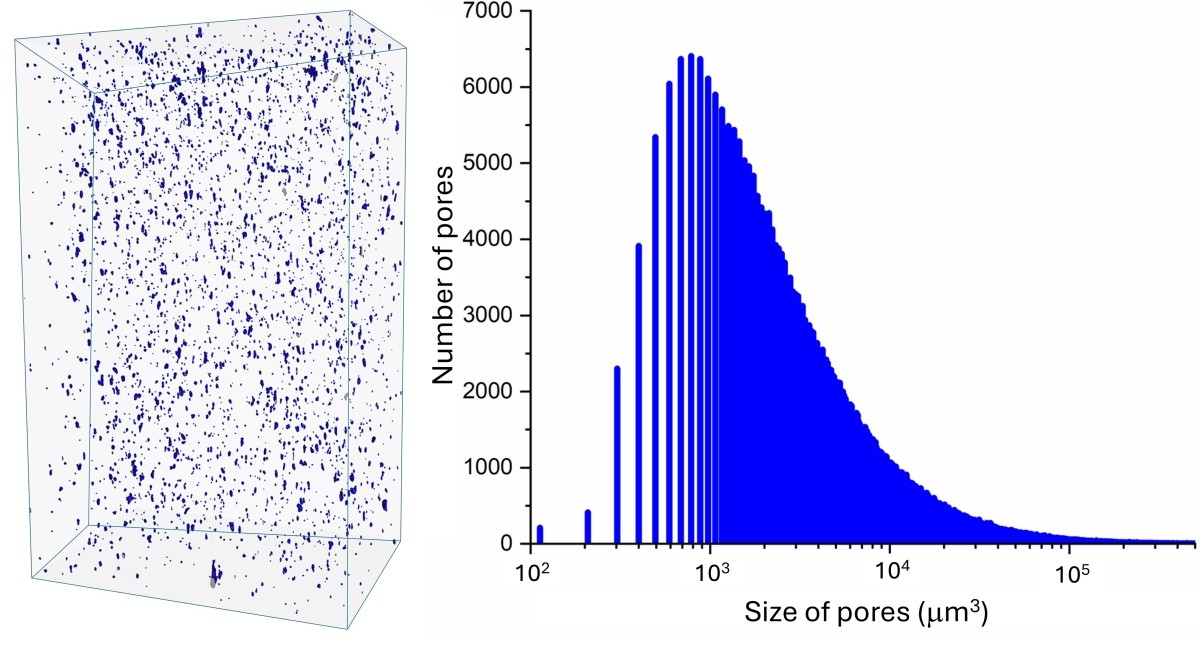
Our imaging expertise enables us to detect defects such as cracks or pores in additively manufactured materials . Using high-resolution synchrotron computed tomography (CT), we can gain detailed insights into the shape and size distribution of the defects. This method provides an exact three-dimensional representation of the defects and where they are located, allowing weak points to be precisely located and analyzed.
Porosity Analysis
Neutron diffraction for studying residual stresses in materials
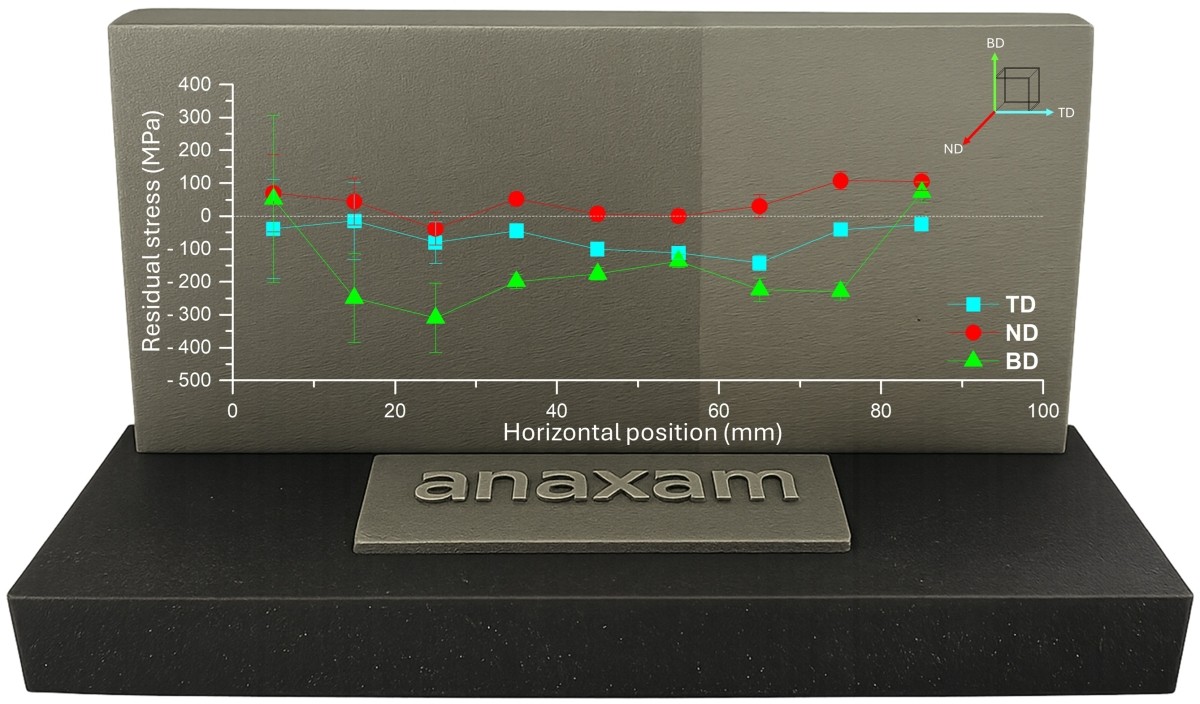
Our expertise in the area of diffraction allows us to measure residual stresses in materials. With residual stress analysis using neutron diffraction we study the changes of the residual stresses inside an engineering part nondestructively. This is useful especially for additive manufactured parts where residual stresses are hardly unavoidable due to the thermal cycles during the process.
Residual Stress Analysis
These customers trust our expertise





































Success stories
By using the advanced analytics of ANAXAM, Lincotek Additive gets a deeper insight and understanding about SLM-processed high temperature materials.”
Dr. Thomas Etter, Expert and Senior Engineer,
Lincotek AdditiveAdditive manufacturing (AM) is a key process in our production chain and vacuum leak tightness of our components is essential. Thanks to ANAXAM state-of-the-art analytical tools were utilized to investigate the properties and microstructure of our AM parts regarding leak tightness.”
Dr. Denys Sutter, CEO,
condenZero GmbHLet’s discuss your challenge
Answers to the most frequently asked questions
Neutron diffraction is a powerful technique for measuring residual stresses in additive-manufactured (AM) parts. It provides non-destructive, bulk stress analysis by penetrating deep into the material. Whether neutron diffraction is a suitable method depends on the material composition, part size, and crystal structure. In principle, any crystalline part larger than the gauge volume, i.e probe size of the neutron beam is suitable foe residual stress analysis.
Residual stress can be measured using neutron diffraction because neutrons, being deeply penetrating, allow for non-destructive measurements of stresses inside a material.
- Deep Penetration into Materials
- Non-Destructive
- 3D Stress Analysis
- Direct measurement, no sample preparation required
- Suitable for Complex Geometries
- Applicable to a Wide Range of Materials
Additive manufacturing (like selective laser melting or electron beam melting) builds parts layer by layer, involving rapid heating and cooling. This causes:
- High thermal gradients
- Complex residual stress fields throughout the part
Discover further solutions
Learn more about us
The large-scale research facilities for our applied material analytics with neutron and synchrotron radiation


Tippen Sie auf die Pins, um sie zu erkunden
Die Art und Weise, wie wir mit Ihnen zusammenarbeiten
Ihre
Herausforderung
Kompetente
Beratung
Angewandte Materialanalytik mit Neutronen- und Synchrotronstrahlung &
massgeschneiderter Infrastruktur
Datenanalyse und
Interpretation
Abschliessender
Bericht
Related Publication